The proposals in “Ya están aquí” already have someone building them: OdiseIA4Good
Idoia Salazar's new book calls for an AI user licence, a mental gym and a network of ambassadors. All three are lines of work the organisation she chairs is already putting in place.
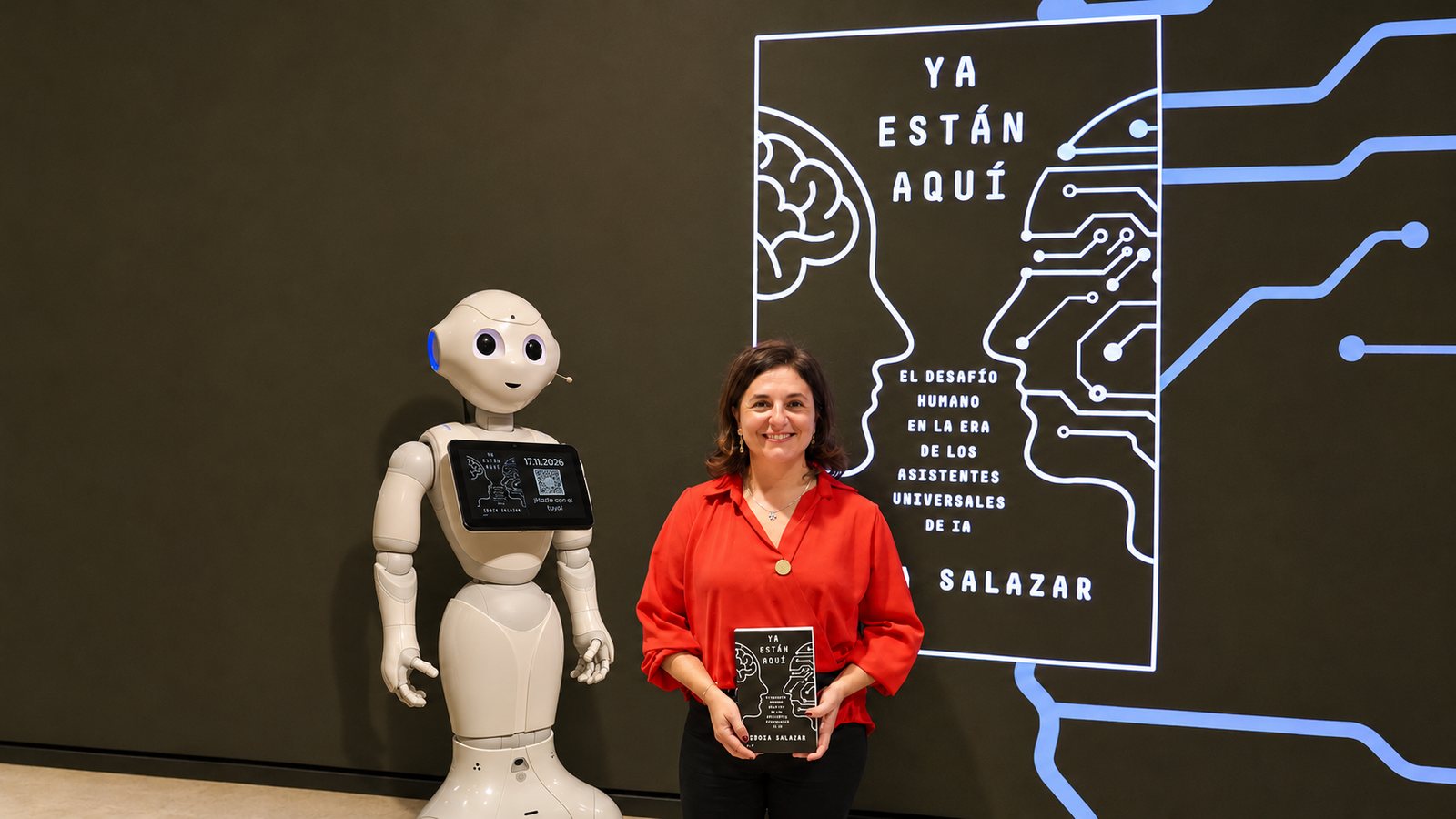
Madrid, 22 November 2026. Idoia Salazar, President of OdiseIA and OdiseIA4Good, published Ya están aquí. El desafío humano en la era de los asistentes universales de IA (“They Are Already Here: The Human Challenge in the Age of Universal AI Assistants”, Ariel) on 18 November. The book examines the leap from chatbots to assistants capable of planning and acting on our behalf, and it does not stop at diagnosis: it closes with three concrete proposals for helping people keep their own judgement. Those three proposals match what OdiseIA4Good is already building.
Salazar uses the term artificial twins for these personal assistants, able to remember our conversations, learn from our habits and use services with the permissions we grant them. The question running through the book is not whether they will arrive, but which decisions we want to keep making ourselves once they do.
From proposal to programme
The book calls for a tiered licence for living with an assistant, modelled on the driving licence, where each level unlocks new functions once an assessment has been passed. This is the idea OdiseIA4Good is developing as Carnet IA, within its Education and Adoption line of work.
It also proposes a mental gym for all ages: continuous training of attention, memory, critical thinking and decision-making. That programme exists within the organisation under the name GimnasIA.
And it calls for a network of AI literacy ambassadors: trusted people trained to explain in their own communities what these assistants can and cannot do. OdiseIA4Good’s Ambassador Network has been bringing AI literacy to schools, companies and communities for some time now.
“The ethics of artificial intelligence cannot remain a statement of principles. If the book calls for a licence, a mental gym and a network of ambassadors, the coherent thing to do is to build them. That is exactly what we are doing,” says Idoia Salazar.
What the book argues
The starting point is an everyday scene: one ordinary morning, before the alarm goes off, an artificial intelligence has already rearranged your diary, answered messages and prepared decisions you used to make yourself.
“This revolution will arrive embedded in ordinary gestures,” Salazar writes. “A recommendation accepted without review. A reply sent on our behalf. A decision that seemed too small to merit attention.”
In response, she proposes three practical questions to keep control of any assistant: can I see what it has changed, can I undo it, and can I easily adjust how much autonomy I have granted it?
The book includes contributions from Richard Benjamins, Stefaan Verhulst, Jassim Hari, Ángel Gómez de Ágreda and Karla Yee Amezaga.
About the book
Ya están aquí. El desafío humano en la era de los asistentes universales de IA · Idoia Salazar · Ariel · Published on 18 November 2026. Available in Spanish.
Press contact: Eduardo Martínez · prensa@odiseia4good.org